 01 · LEARNING
More room
for bright ideas.
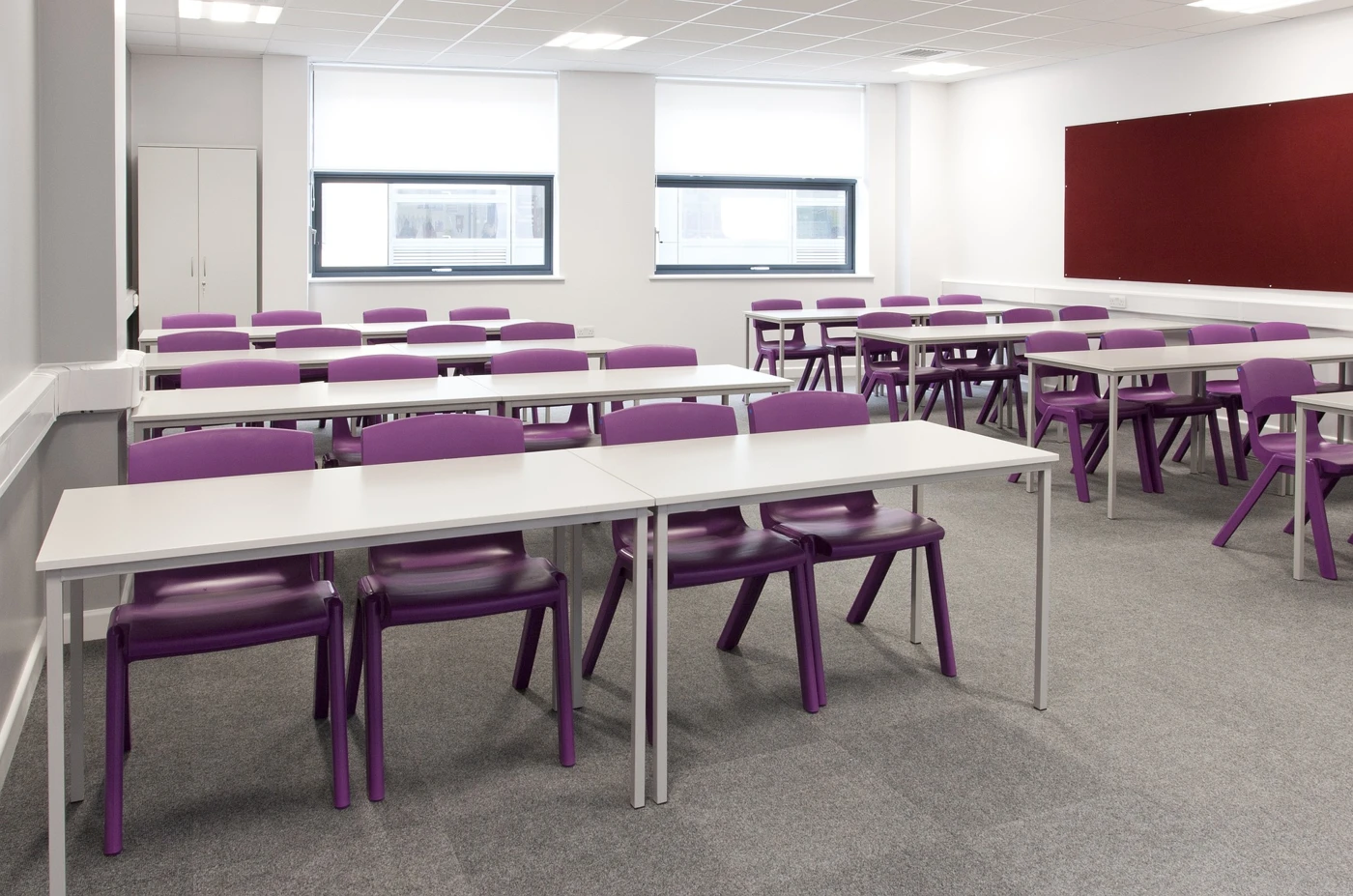
Fresh air helps create a good learning environment. Regular air exchange removes the CO₂ we breathe out.
A call for cleaner air
To learn. To live. To be together.
Let’s work together for better air
in nurseries, schools and all public buildings.

Our lives are worth so much more.
Small changes. A big difference.
Every day, we share the air in nurseries and schools. Its quality deserves just as much attention as clean drinking water.
01 · LEARNINGFresh air helps create a good learning environment. Regular air exchange removes the CO₂ we breathe out.
Ventilation and suitable air cleaning can reduce the concentration of infectious aerosols. They are parts of a shared approach to protection.
Children, staff and their families all stand to benefit.
Health, wellbeing and participation belong together. Good indoor air should benefit every child, whichever nursery or school they attend.
Background information for everyday decisions and conversations.
Background reading: German Environment Agency: Ventilation in schools (German) ↗
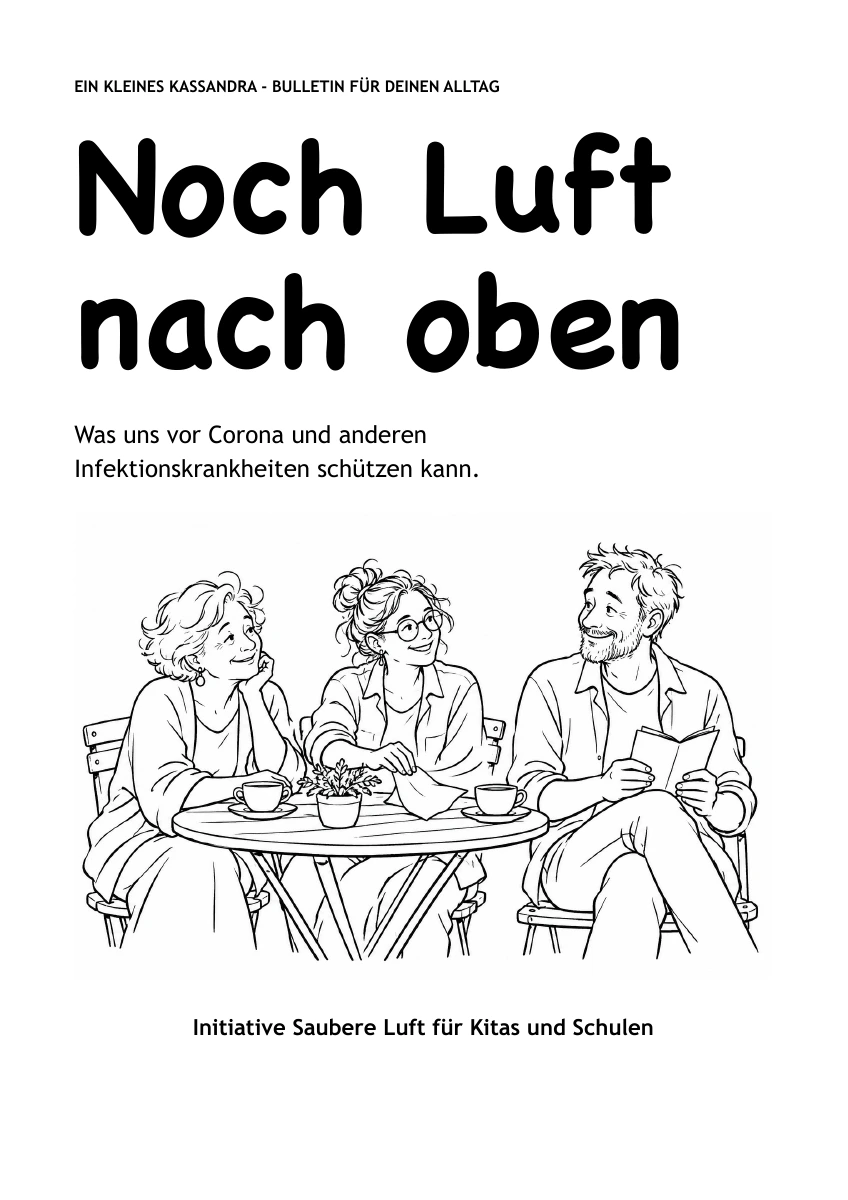
The new Kassandra Bulletin: clear information about COVID-19, other infectious diseases and everyday protection. To read, share and start conversations. Available in German.
20 pages. Free. For you and the people around you.
Print in A4 landscape, double-sided, flipping on the short edge, at 100% / actual size. The pages are already arranged in booklet order: do not select an additional booklet-printing option. Print one test sheet first, then nest the sheets, fold them down the middle and staple. The 10 printed sides use 5 A4 sheets to make a 20-page A5 booklet.
Earlier editions remain available in the booklet archive.
Understand. Improve. Keep going.
Seven ideas for better planning and reliable everyday practice.
Indoor air quality and reducing infection risks call for cooperation between experts in medicine, building services and other relevant fields.
Window ventilation needs a plan suited to the room and how it is used. Whether it works adequately depends on factors including window area, occupancy and the weather.
Good indoor air should be part of new buildings and renovations from the outset. Air exchange, acoustics, energy use and thermal protection need to be considered together.
Suitable air filters can complement ventilation but cannot replace the supply of outdoor air. UV-C technology requires expert assessment of effectiveness and safety.
Room size, occupancy, time spent indoors and activities should inform the planning and control of ventilation.
Measurements and regular maintenance help keep track of how a ventilation plan works while a building is in use.
Clear goals, defined responsibilities and transparent information help maintain good air quality over the long term.
The seven ideas draw on the Science article, DOI: 10.1126/science.adp2241 ↗. For context on ventilation and filtration, see the German Environment Agency links above.
Knowledge to share
Why does indoor air matter? What can we change? The presentation illustrates the background and examples for parent meetings, teams and anyone interested.
Click through all 47 German slides here. Canva also includes animations and videos. Canva with animations and videos
The presentation and older resources date from 2024. For the latest booklet, use Kassandra Bulletin 2026. The downloads and slides are in German.

Your contribution can make a difference.
Share the Kassandra Bulletin, in print or as a link. With friends, colleagues or at a parents’ meeting: you can help start a conversation.
Talk openly about infectious diseases and their possible consequences. Ask questions, listen and share reliable information. Even when you disagree, stay calm and respectful. If a conversation gets stuck, take a break and return to it another time.

The pandemic also finds a place in my fiction. In my novella Heimlicht, I explore the subject as a storyteller.